
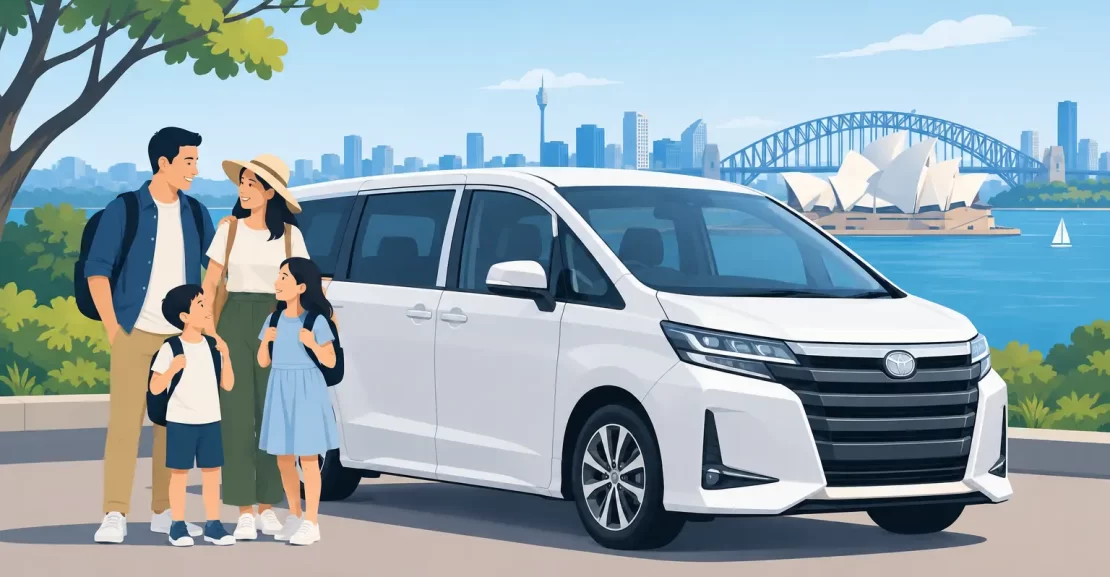
A family car has to work harder than most vehicles. It needs room for child seats, sports gear, prams, school bags and long weekends away, while still being comfortable enough that nobody dreads the third row. The best Japanese people movers offer a stronger alternative to many conventional SUVs: proper passenger space, clever cabin layouts and the build quality Japanese vans are known for.
For Australian buyers, the right choice depends on how you use it. Some people want lounge-like comfort for family road trips. Others need all-wheel drive for regional travel, a compact van that fits city parking, or a practical vehicle that can carry adults in every row. Import eligibility, compliance, servicing history and parts support should also be part of the decision, not an afterthought.
What Makes a Good Japanese People Mover?
A people mover should be judged from the rear seats forward. Check how easily passengers can access the third row, whether the middle seats slide or recline, and how much boot space remains when every seat is in use. A seven- or eight-seat rating is useful, but the real question is whether it can carry your family and their gear without turning the cabin into a game of Tetris.
Japanese domestic market vehicles are often exceptionally well specified. Depending on the model and grade, features can include dual power sliding doors, captain’s chairs, multiple climate zones, reversing cameras, electric tailgates and generous sound insulation. Many were designed for large Japanese families and executive transport, so passenger comfort is usually a priority rather than an optional extra.
That said, an imported people mover needs to suit Australian ownership. Confirm its compliance pathway, child-restraint anchorage arrangement, registration requirements and insurance options before committing. For older imports, condition and service history matter more than an impressive feature list. A well-maintained vehicle with specialist support is generally the smarter buy.
Best Japanese People Movers to Consider
Nissan Elgrand: The Comfortable Family Cruiser
The Nissan Elgrand remains one of the most popular Japanese import people movers in Australia, particularly the E51 generation. It is spacious, well equipped and noticeably more luxurious than many mainstream vans of its era. The cabin feels broad and substantial, with easy access through sliding rear doors and seating layouts that work well for families.
The E51 was available with V6 petrol engines, including the 3.5-litre VQ35, and some variants offer all-wheel drive. The engine gives the Elgrand easy highway performance when loaded, but it also comes with a clear trade-off: fuel use can be significant, especially around town. Buyers who prioritise interior room, smooth performance and long-distance comfort may consider that worthwhile.
Later E52 Elgrands bring a more modern cabin and a softer, more refined driving character. They can be a strong choice for buyers wanting premium people-mover comfort, although vehicle availability, import eligibility and servicing requirements should be checked model by model.
Toyota Alphard and Vellfire: Premium Space Done Properly
If refinement is high on the list, the Toyota Alphard and its sportier-styled sibling, the Vellfire, are difficult to overlook. These are not basic passenger vans. They are designed around comfort, quietness and usable space, often with captain’s chairs that make the second row feel closer to business-class travel than school-run transport.
The Alphard generally carries a more understated appearance, while the Vellfire has a sharper front-end design and a more aggressive visual presence. Underneath, the ownership proposition is similar: a luxurious Toyota people mover with a strong reputation for quality and family-friendly practicality.
Hybrid versions can be appealing for buyers covering plenty of suburban kilometres, while petrol models may better suit those who prefer simpler drivetrain ownership. As with any hybrid import, condition checks are essential. Battery health, service records and a workshop familiar with the vehicle are more useful than relying on odometer figures alone.
Mitsubishi Delica D:5: For Families Who Leave the Bitumen
The Mitsubishi Delica D:5 takes a different approach. It is the people mover for families who need real versatility beyond sealed roads. With its higher ride height, practical body shape and available four-wheel-drive capability, the Delica has earned a following among campers, skiers, regional travellers and owners who want one vehicle to cover daily family duties and weekend escapes.
Its interior is generally more durable and functional than an Alphard or Elgrand, rather than outright luxurious. The seating and cargo areas are designed to be used, which suits muddy boots, camping equipment and active households. The driving position also gives a better view of the road than lower-slung people movers.
The trade-off is that it can feel less plush than the premium Toyota and Nissan options, and tyres, suspension components and underbody condition deserve close inspection on any vehicle that has seen rougher terrain. For the right owner, though, it is one of the most capable family imports available.
Honda Stepwgn: Clever, Compact and Easy to Live With
The Honda Stepwgn is a practical answer for families who need three rows but do not want the size of a full luxury van. It has a square, space-efficient body, wide-opening doors and flexible seating, making it particularly useful for school runs and urban driving.
Honda’s cabin packaging is usually the standout. There is good headroom, easy movement between rows and a layout that makes everyday loading simpler. Later models can also offer useful modern safety and convenience technology, depending on grade.
The Stepwgn is not the choice for someone wanting a V6 tow vehicle or a high-riding adventure van. Its appeal is efficiency of space and ease of use. For smaller families, or those regularly parking in tighter suburban streets and shopping centres, that can be more valuable than sheer size.
Nissan Serena: The Sensible High-Spec Option
The Nissan Serena sits in a similar space to the Stepwgn, offering a compact exterior footprint with a tall, highly usable cabin. It is a sensible choice for buyers who want electric sliding doors, flexible seating and modern convenience without stepping into the larger Elgrand class.
Many Serena variants are equipped with features that make family life easier, including around-view cameras, power doors and configurable seating. Hybrid and e-POWER versions may also appeal to buyers focused on fuel consumption, but they should be assessed carefully for battery and electrical-system condition.
Like the Stepwgn, the Serena is best viewed as a practical family tool rather than a prestige vehicle. It does its job well, particularly where manoeuvrability and easy passenger access matter every day.
Choosing Between the Best Japanese People Movers
There is no universal winner. An Elgrand is compelling when you want a spacious, powerful cruiser and are comfortable with V6 running costs. An Alphard or Vellfire makes sense when premium cabin comfort and Toyota refinement come first. The Delica D:5 suits active families who need all-weather and light off-road confidence, while the Stepwgn and Serena are better matched to buyers who value compact dimensions and smart interior packaging.
Before choosing a model, think honestly about how many people travel in it most weeks. If the third row is only used occasionally, a compact people mover may be enough. If you regularly carry teenagers, grandparents or adult passengers, the extra width and seat comfort of an Elgrand or Alphard will pay off quickly. Also consider parking at home, garage height, fuel budget and whether you need a meaningful boot with every seat occupied.
What to Check Before Buying an Imported People Mover
A clean-looking import is not automatically a good one. Start with the basics: auction history where available, service records, body condition, underbody corrosion, tyre age and evidence of proper maintenance. A pre-purchase inspection by a workshop that understands Japanese imports can identify leaks, suspension wear, cooling-system issues, transmission concerns and electrical faults before they become your problem.
For people movers, test every family-focused feature. Operate both sliding doors repeatedly, check air-conditioning in all rows, fold and slide every seat, and make sure the rear camera and infotainment system function as expected. Confirm the child-seat arrangement suits your needs rather than assuming every seating position will work for your preferred restraints.
It is also worth asking about parts access. Common service items are usually straightforward, but imported trim pieces, door components and model-specific electronics may take longer to source. Choosing a vehicle supported by an established import specialist can make ownership far less complicated. At Sinergy Motorsports, the same Japanese vehicle experience that helps buyers choose the right import also supports maintenance and parts needs after delivery.
The best choice is the people mover that fits your real routine, not just the one with the biggest screen or most seats. Take the family along for a proper inspection, try the seating layout with the gear you actually carry, and choose a vehicle with the condition and support to keep serving you well for years.