
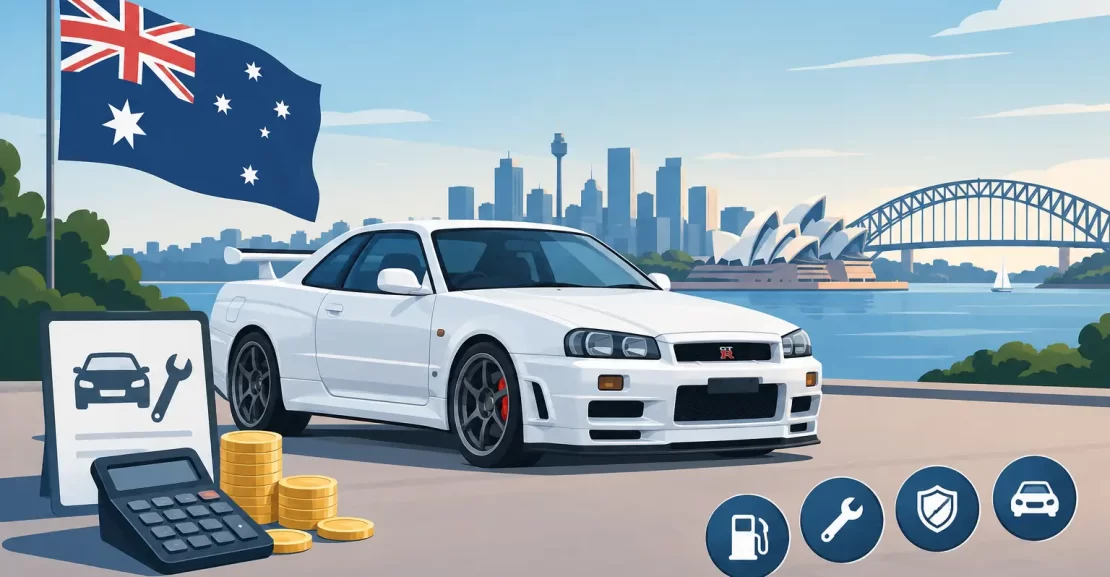
A clean R33 Skyline, turbo Honda or Toyota people mover can look like a straightforward purchase until the first registration renewal, tyre quote or hard-to-find sensor arrives. This JDM ownership cost guide is built for Australian buyers who want the full number, not just the advertised price. A well-bought import can be a rewarding and sensible long-term car. The key is allowing for its age, condition, compliance history and intended use before you commit.
Start with the real drive-away figure
The purchase price is only the beginning. If you are buying a locally complied, registered vehicle from an established import dealer, much of the hard work has already been handled. You should still account for stamp duty, registration transfer or renewal, compulsory third party insurance and any finance establishment costs where applicable.
A vehicle that is already on Australian roads is usually easier to budget for than a fresh import, but condition remains the deciding factor. Two similar-looking JDM cars can be priced thousands apart because one has documented servicing, quality parts, a clean body and sorted compliance, while the other needs immediate mechanical and cosmetic attention. The cheaper car is not automatically the lower-cost car.
For a private sale, set aside money for an independent pre-purchase inspection. It is a modest cost compared with finding rust around suspension mounts, poor previous repairs, low compression, drivetrain noise or an engine conversion that has not been engineered correctly. Imports from the 1990s and 2000s are now old enough that age-related work matters as much as odometer reading.
Compliance, registration and paperwork
Compliance is not a formality to overlook. Check that the car has been properly complied for Australian road use and that modifications match the approval paperwork where required. Suspension, wheels, seats, steering wheels, engine changes and exhaust systems can affect roadworthiness, insurance and future resale.
Registration costs differ between states, and South Australian buyers should also budget according to their vehicle’s class and use. Before purchase, confirm the VIN, engine number, registration status and any conditions attached to the vehicle. Clear paperwork protects your ability to insure, register and sell the car later.
Insurance can be the surprise cost
Insurance pricing for JDM vehicles varies more than many buyers expect. A naturally aspirated Toyota sedan or Japanese van may be relatively straightforward. A turbocharged Skyline, Silvia, Evo, WRX or modified Honda can attract higher premiums due to theft risk, repair values, driver profile and performance modifications.
Get a quote before paying a deposit, especially if you are under 30, have limited driving history or plan to keep the car garaged at a different address. Ask whether the policy is agreed value or market value, whether modifications must be individually declared, and whether it covers imported parts at replacement cost. A low premium is less useful if the agreed value is below what a clean example would cost to replace.
Track use is another line to read carefully. Most normal road policies will not cover timed events, track days or competition use. If you intend to enjoy the car beyond a Sunday drive, factor separate cover and the increased maintenance that performance driving brings.
Servicing costs depend on the car you buy
A JDM vehicle does not need to be expensive to maintain, but it does need the right maintenance. Routine oil and filter services are broadly comparable with other cars when access is good and common consumables are available. The difference appears when a car has specialist engines, modified wiring, ageing turbo systems, four-wheel-drive drivetrains or parts that were never sold locally.
A practical ownership budget should include a yearly service allowance, even if the car covers low kilometres. Older imports often need fluids, belts, hoses, seals and batteries based on time rather than distance. A car that has sat for long periods can need more attention than one driven and maintained regularly.
For performance models, budget for quality oil, correct coolant, premium fuel and more frequent checks. Saving money on fluids or filters is false economy on an RB, 2JZ, SR20, 4G63, EJ or rotary engine. The same applies to modifications. More boost, aggressive tuning and aftermarket fuel systems can deliver strong results, but they also make professional diagnostics and preventative maintenance more important.
The major jobs to price before buying
Ask when the timing belt or chain-related service was last completed, where relevant, and whether there is evidence. On many older Japanese engines, a timing belt service is a major scheduled expense. Clutch replacement, turbo work, cooling-system repairs, suspension bushes and gearbox servicing are other common larger jobs, depending on model and use.
Tyres, brakes and suspension deserve an honest allowance as well. A performance car on wide tyres and large brake packages will cost more to keep safe than a standard commuter, even when it is driven gently. If a car has adjustable suspension or aftermarket wheels, make sure it can be aligned correctly and remains legal for road use.
A thorough workshop inspection should look beyond a quick scan for fault codes. It should assess oil leaks, cooling performance, underbody condition, drivetrain operation, brake wear, wheel bearings, electrical repairs and signs of accident damage. This is where specialist experience with Japanese classics pays for itself.
Parts availability is better than the myths suggest
The old claim that every JDM part is impossible to find is simply not true. Service items for popular models are often readily available, and there is strong OEM and aftermarket support for Skylines, Supras, Hondas, Toyotas, Mazdas and other established platforms. The challenge is knowing which parts should be genuine, which aftermarket brands are proven, and when a second-hand component is an acceptable option.
Costs rise when a vehicle has rare trim, obscure electronics, model-specific body parts or discontinued components. A damaged headlight, climate-control module or interior switch can take more time to source than a set of brake pads. If originality matters to you, allow more for restoration-grade parts and paintwork than you would for a modified street car.
Buying a complete, well-kept example remains the best way to manage these costs. Cheap cars with missing trim, questionable wiring and unfinished modifications often consume the saving quickly. A car with service history and a sensible parts list gives you a much clearer ownership path.
Fuel, finance and daily-use costs
Fuel use depends on engine size, tuning, transmission and how the car is driven. Turbo performance cars can be surprisingly reasonable on a highway run, then use considerably more fuel in traffic or under boost. Many Japanese hybrids, vans and later-model SUVs can make far more practical daily drivers, but their battery condition, transmission servicing and electronic systems should still be assessed before purchase.
If finance is part of the purchase, focus on the total amount payable rather than the weekly figure alone. Loan term, interest rate, fees, deposit and balloon payment can change the true cost substantially. A shorter term usually means higher repayments but less interest overall. Leave room in the household budget for servicing and unexpected repairs rather than putting every available dollar into the purchase.
For a weekend classic, annual kilometres may be low but fixed costs still apply: registration, insurance, storage, servicing and battery maintenance. For a daily driver, factor fuel, tyres, parking and the cost of being without the car while parts are sourced. The right choice depends on whether the vehicle is a project, a collectible, a commuter or all three.
Build a reserve before the keys change hands
The most useful line in any JDM ownership cost guide is the contingency fund. Keep a reserve after purchase for the first 6 to 12 months of ownership. The amount should be larger for older turbocharged cars, heavily modified examples and vehicles with incomplete history. It may go untouched, but it lets you fix issues properly instead of delaying work or choosing unsuitable parts.
At Sinergy Motorsports, more than 20 years spent maintaining Japanese imports has shown that ownership is usually straightforward when the vehicle starts with a sound base and receives the right attention. Buy on condition, verify the paperwork, insure it correctly and give it a realistic maintenance budget. That approach leaves more time for the reason you wanted a JDM car in the first place: enjoying a distinctive machine that still feels special every time you drive it.