
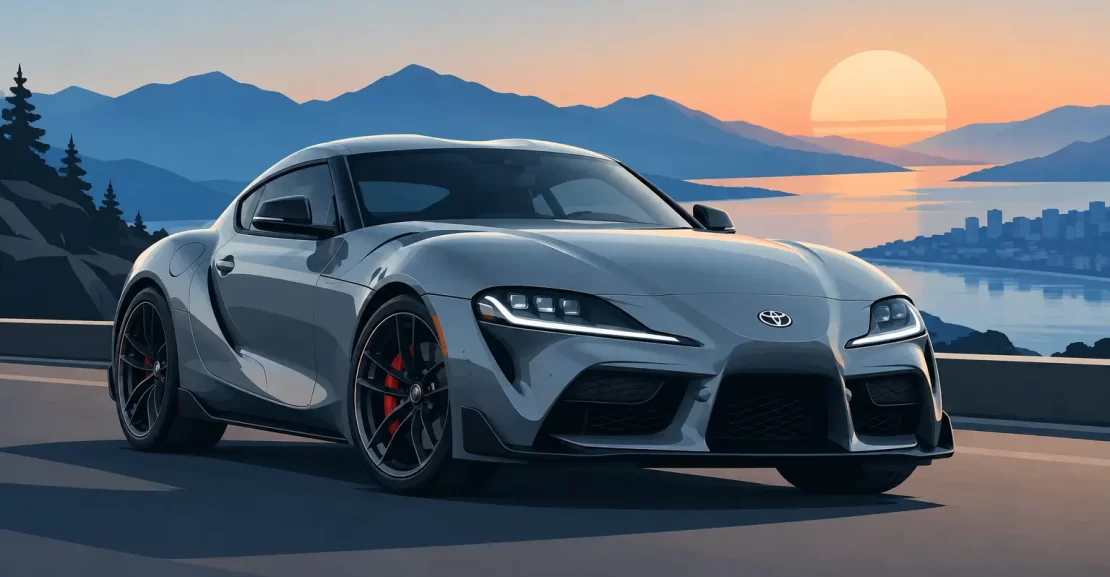
The Supra has never been a car people buy by accident. A proper Supra review has to look beyond the badge, the power figures and the Fast and Furious-era hype. For Australian buyers, the real questions are simpler: which generation suits the way you drive, what condition is it actually in, and can you afford to own it properly once it is in the garage?
Toyota’s flagship sports coupe has worn several very different personalities. The Mk4 A80 is the 1990s Japanese hero with serious collector appeal. The current A90 is a compact, highly capable modern performance car built with BMW engineering underneath. Both can be excellent purchases. They are not interchangeable, and neither is automatically the right choice just because it says Supra on the boot.
Supra review: Mk4 A80 versus A90
The A80, commonly called the Mk4 Supra, is the car that built the legend. Its long bonnet, rear-drive layout and 2JZ engines gave it a reputation that has only grown as clean Japanese performance cars have become harder to find. In twin-turbo 2JZ-GTE form, it remains one of the most tuneable production engines of its era. That does not mean every turbo Supra is a bargain, or that every modified example is a good buy.
A naturally aspirated 2JZ-GE A80 can make more sense for an owner who wants the look, chassis and classic Toyota feel without chasing big boost. It is still an engaging rear-wheel-drive coupe, usually with fewer expensive performance parts to inspect. But values are influenced heavily by turbo status, transmission, originality, colour, kilometres and documented history. A clean, well-presented car will always be easier to enjoy and easier to sell than a cheap project with unclear modifications.
The A90 Supra takes a different approach. It is shorter, stiffer, quicker to respond and far easier to use every day. The turbocharged six-cylinder B58 engine has strong torque, the automatic transmission shifts quickly, and the chassis is genuinely sharp on a good road. Later manual versions add another layer of involvement for buyers who want it. It feels more modern than the A80 in every measurable way, from braking and safety systems to cabin technology and outright pace.
The trade-off is character. Some buyers will never warm to the BMW-derived switchgear, infotainment and engine bay. Others will see the BMW relationship as a benefit, because the B58 is a proven, capable engine with a large knowledge base. The sensible view is to judge the car in front of you, not a forum argument. A90 parts, servicing procedures and diagnostics need the right equipment and experience, while an A80 needs a workshop that understands ageing Japanese mechanicals and imported-car history.
What makes the Supra special to drive?
The Mk4 rewards a deliberate driver. It is a bigger, more old-school coupe than many people expect, and a standard or lightly modified example feels more relaxed than modern turbo cars at low speed. Once the engine is working and the road opens up, the balance of rear-drive traction, straight-six torque and strong high-speed stability explains the appeal. A manual RZ can feel properly special, but it deserves respect, especially if power has been increased.
A90 performance is easier to access. It has fast steering, impressive front-end grip and enough torque to make ordinary road speeds feel entertaining. The automatic is well matched to the engine, and the car has the refinement to handle commuting, weekend runs and longer trips without the compromises of a 25-plus-year-old import. It is not as raw as an A80, but that is exactly why some owners will get more use from it.
Neither generation needs excessive modifications to be enjoyable. Quality tyres, healthy brakes, correct wheel alignment and suspension in good condition matter more than chasing a dyno number. On an A80, a tired chassis can make an otherwise desirable car feel loose and disappointing. On an A90, poor tyre choices or neglected maintenance can dull what is a very capable package from the factory.
The checks that matter before buying
Condition and provenance should lead every Supra purchase. This is particularly important with JDM imports, where auction sheets, import documentation, past servicing and compliance records can tell a more useful story than an optimistic advertisement. A low odometer reading is not enough on its own. Look for consistency across the interior wear, underbody condition, service records and the vehicle’s overall presentation.
On an A80, inspect for corrosion around the chassis, suspension mounting points, sills, hatch area and underbody. Australian cars can still suffer from rust if they have spent time in wet climates before import or have been repaired poorly. Check panel gaps, paint finish and signs of accident repairs. Originality is valuable, but a thoughtfully upgraded car with invoices, quality components and professional workmanship can still be a strong buy.
Mechanical checks should include cold starting, idle quality, oil leaks, cooling-system condition, clutch operation and gearbox behaviour. Listen for drivetrain noise and inspect for smoke under acceleration. Turbo cars need particular attention around boost control, intercooler plumbing, fuel system upgrades and tuning. A bigger turbo, aftermarket ECU and loud exhaust do not automatically make a car better. They increase the need for evidence that the supporting work has been done correctly.
For an A90, confirm servicing has been completed to schedule and scan the car for stored fault codes before committing. Check the cooling system, tyres, brake wear, suspension condition and operation of all driver-assistance and infotainment functions. Modified A90s should be assessed just as carefully as modified A80s. A conservative tune from a known provider is a very different proposition from an unknown calibration with no supporting paperwork.
A pre-purchase inspection is money well spent on either model. It gives buyers a realistic picture of present condition and likely upcoming costs, rather than relying on the excitement of a test drive.
Ownership costs are about more than fuel
The Supra can be dependable, but it is not a low-cost ownership experience when maintained properly. The A80 is now a classic performance car, so rubber hoses, seals, bushes, sensors and cooling components may need attention simply because of age. Genuine parts availability varies, and certain trim, interior and model-specific components can be expensive to source.
A90 maintenance is generally more predictable, but it should not be treated like an ordinary commuter. It uses performance tyres, larger brakes and modern electronic systems, and specialist servicing is worthwhile. Insurance can also vary significantly based on age, garaging, modifications, agreed value and driver history. Obtain quotes before purchase, particularly for a Mk4 turbo or any heavily modified example.
Fuel consumption depends on how the car is driven. A standard A90 can be reasonable on a highway run, while an A80 with an aggressive tune or larger turbo will naturally use more fuel when driven hard. Budget for the whole ownership picture: servicing, tyres, brakes, insurance, registration, repairs and a contingency fund. The cheapest advertised Supra can become the most expensive one quickly.
Is a Supra a sensible Australian buy?
For a buyer wanting a modern, usable sports coupe with serious performance, the A90 is the easier recommendation. It offers warranty potential on newer examples, current safety equipment and a driving experience that works well beyond Sunday mornings. The manual is worth seeking out for drivers who value interaction, while the automatic suits those who want the fastest and most relaxed all-round package.
For collectors and long-term enthusiasts, a well-kept A80 has an appeal few modern cars can reproduce. Its value lies in more than 2JZ potential. The shape, analogue feel and importance in Japanese performance-car history make it special. But it needs to be bought patiently. The right vehicle may cost more upfront, yet save a great deal of frustration later.
At Sinergy Motorsports, we have spent more than 20 years working with Japanese classics and understand that the best purchase is not always the one with the biggest modification list. Whether you choose an A80 or A90, prioritise condition, documentation and specialist inspection. That approach gives you the best chance of owning a Supra that performs at its best and remains a car you look forward to driving.