
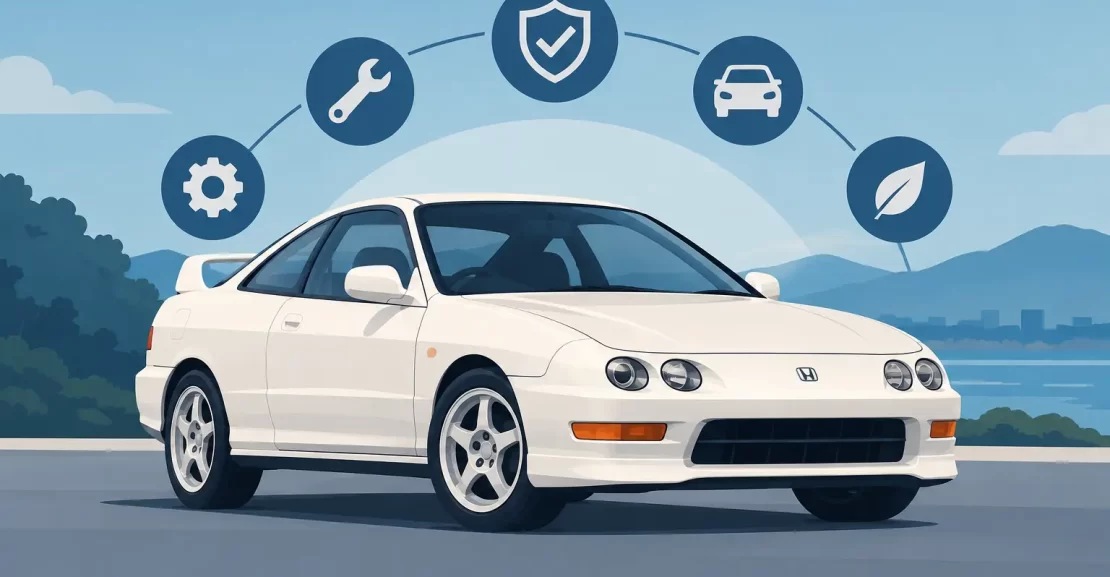
A clean Honda Integra can still be one of the most satisfying Japanese performance cars to own, but the badge alone is not a condition report. In this Honda Integra reliability review, the key point is simple: these are generally dependable cars when they have been maintained properly, but most examples are now old enough that past ownership matters more than the odometer reading.
For buyers looking at a DC2, DC5 or Type R, the best car is rarely the cheapest one advertised. A well-presented Integra with documented servicing, standard or sensible modifications, and a rust-free body will usually be a far better purchase than a heavily modified bargain with an uncertain history.
Are Honda Integras reliable?
Yes, in the right hands. Honda built the Integra around engines and drivetrains known for taking regular use well, particularly the B-series engines in earlier cars and the K-series engines fitted to the DC5. Parts availability remains reasonable for common service items, and there is strong knowledge across the Honda enthusiast and workshop community.
The caveat is age. The newest DC5 Integra is now more than 20 years old, while DC2 cars are firmly in classic territory. Rubber seals harden, bushes wear, cooling systems age and previous repairs can vary wildly in quality. Reliability is not just about whether the engine starts every morning. It is also about whether the car stops, steers, cools and drives properly in Australian conditions.
A stock, regularly serviced Integra can be a sensible weekend car or even a practical second vehicle. A track-focused Type R with unknown tuning, cheap coilovers and a hard life needs to be assessed as a project, regardless of how tidy it looks in photos.
Honda Integra reliability review by generation
DC2 Integra and DC2 Type R
The DC2 remains a favourite for good reason. It is light, direct and mechanically straightforward. Non-Type R models commonly use variants of Honda’s B-series four-cylinder engine, while the Type R is known for its high-revving B18C. These engines are durable when serviced with the correct oil and allowed to warm through before being worked hard.
The most important maintenance item is the timing belt. Unlike the later K-series, the B-series uses a belt that must be changed at the correct interval along with associated components. A seller saying it was done “not long ago” is not enough. Ask for an invoice showing when the belt, tensioner and water pump were replaced. If there is no proof, budget to have the work completed immediately.
Oil leaks around the rocker cover, sump and distributor area are common on older examples and are not automatically serious. Oil consumption, blue exhaust smoke, overheating or a noisy top end deserve closer investigation. A healthy B-series should pull cleanly and willingly through the rev range, without hesitation or a cloud of smoke after idling.
DC2 body condition is often more significant than minor mechanical faults. Check the sills, floorpan, rear wheel arches, boot floor, suspension mounting points and lower radiator support for rust or poor crash repairs. Imported cars may have spent time in Japan’s colder regions, where corrosion can be far more advanced than expected.
DC5 Integra and DC5 Type R
The DC5 is usually the easier Integra to live with if you want a more modern cabin, stronger safety equipment and K-series power. The K20A and K20A2-based engines have an excellent reputation, with a timing chain rather than a scheduled timing belt replacement. That does not mean they are maintenance-free. Regular quality oil changes are essential for variable valve timing operation and long-term chain health.
Listen for excessive rattles at cold start, investigate any engine warning lights and confirm the engine reaches operating temperature without climbing above it. A tired radiator, thermostat, fan control issue or neglected coolant can turn an otherwise dependable Honda into an expensive head-gasket repair.
DC5 gearboxes deserve careful attention, especially in Type R models. A notchy shift when cold can be normal in an older manual, but persistent crunching into second or third gear once warm may point to worn synchromesh. Test the car thoroughly, shifting gently and then more quickly through the full rev range. Also check that the clutch engages cleanly and that the car does not jump out of gear on overrun.
The DC5’s electric power steering, air-conditioning, central locking and window regulators should all be tested. These are not reasons to walk away from a good car, but they affect the real cost of ownership and can be frustrating to sort once parts or trims become harder to source.
What to inspect before buying an Integra
Start with a cold engine. A seller who has warmed the car before you arrive may have a perfectly good reason, but you should still ask why. Cold starting reveals idle quality, smoke, rattles and battery condition far better than a quick drive around the block.
Service records should show consistent oil changes, not just a recent stamp or two before sale. For an imported Integra, verify the chassis number against documentation and assess the credibility of the odometer reading. Auction paperwork, import approval documents and Japanese service records can add valuable context. They do not replace a mechanical inspection, but they help establish the car’s story.
Pay close attention to modification quality. Hondas respond well to carefully selected upgrades, but modifications can also hide poor maintenance. An intake and exhaust from recognised manufacturers, fitted neatly and supported by correct tuning where required, are different from cut wiring, loose hoses and an engine bay full of mismatched parts.
On the road, the car should track straight, brake without pulling and feel composed over uneven surfaces. Clunks can come from worn control arm bushes, ball joints, engine mounts, sway bar links or tired dampers. None is unusual on a car of this age, but several neglected jobs together can quickly change the purchase price.
A pre-purchase inspection by a workshop familiar with Japanese imports is money well spent. At Sinergy Motorsports, the focus is on identifying the condition issues that matter before they become your first repair bill, including underbody condition, drivetrain operation and evidence of prior damage.
Common ownership costs to plan for
Integra running costs are usually manageable compared with many modern performance cars, particularly if you buy a sound example. Routine servicing, filters, plugs, fluids, tyres and brake components are familiar ownership expenses. Type R parts, genuine trim pieces and model-specific interior items can command more money as good cars become collectable.
The larger costs are generally corrective rather than scheduled: gearbox repairs, air-conditioning work, suspension refreshes, body rust repairs and undoing poor modifications. This is why a complete, well-maintained car often represents better value even when its asking price is higher.
Be realistic about how you will use it. A low, stiffly sprung Integra on aggressive tyres may be brilliant on a smooth Adelaide Hills road and tiresome on rough suburban streets. A standard or lightly improved car is normally easier to maintain, insure and enjoy regularly.
Is an Integra a good buy now?
For an enthusiast who wants a genuine analogue Japanese sports coupe, an Integra remains a strong choice. It offers engaging front-wheel-drive handling, engines with real character and a simpler ownership experience than many newer turbocharged performance cars. The DC5 makes particular sense for buyers wanting a usable modern classic, while the DC2 appeals to those chasing a lighter, more old-school feel.
Buy on condition, records and workmanship rather than colour, badges or claimed power figures. A careful inspection may not be as exciting as the first VTEC pull, but it is what gives you the best chance of enjoying that pull for years to come.