
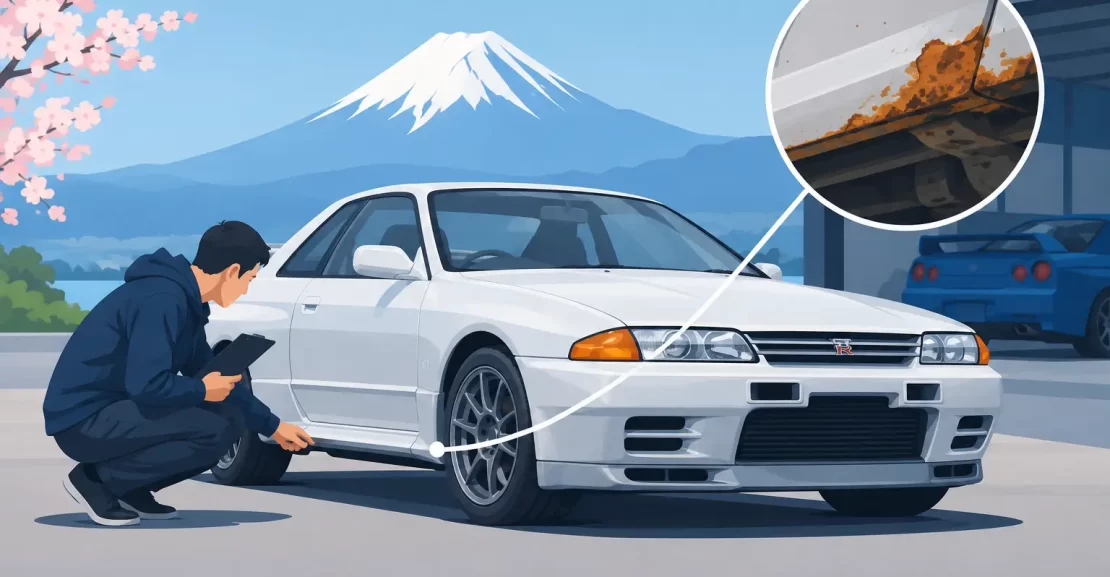
A clean auction sheet and shiny paint can make an import look like a safe bet, but do JDM cars rust? Yes, they can. Japanese domestic market vehicles are not immune to corrosion, and on a 1990s or 2000s classic, rust condition can matter more than kilometres, paintwork or a long list of performance parts.
The good news is that many JDM cars arrive in far better structural condition than equivalent Australian-delivered cars. The catch is that Japan has snowy regions, coastal areas and humid climates where road salt and moisture create corrosion problems of their own. The right car can be an excellent buy. The wrong one can turn a straightforward service or restoration into major body and fabrication work.
Why JDM cars rust
Rust starts when steel, oxygen and moisture get together. Salt accelerates the process dramatically, which is why vehicles used in northern Japanese prefectures can corrode underneath despite having tidy interiors and low odometer readings.
Japan’s compulsory inspection system, known as shaken, also means some owners move cars on before expensive repairs are due. That does not mean every imported vehicle is neglected. It does mean a recent inspection or fresh paint should never replace a proper underbody assessment.
Age is another factor. Most enthusiast imports are now 20 to 35 years old. Seals harden, drain holes block, seam sealer cracks and stone chips expose bare metal. A car that spent its early life in a dry region can still develop corrosion after years of use if water is trapped in the wrong place.
Australian conditions are generally kinder to body shells than salted winter roads, particularly in Adelaide. However, coastal air, beach driving, wet carpets and poor previous repairs can all keep corrosion moving once the car is here.
Where to check JDM cars for rust
Surface corrosion on an exhaust, suspension fastener or unpainted bracket is common on older vehicles. It needs attention, but it is not automatically a deal-breaker. Structural rust is the concern. This is corrosion in the body shell, chassis rails, suspension mounting points or areas that affect safety, alignment and the vehicle’s ability to be properly repaired.
Underbody, rails and suspension mounting points
Start underneath. Look along the chassis rails, floorpan seams, jacking points, crossmembers and mounting points for control arms, subframes and suspension components. Flaking metal, swelling seams, holes, heavy scale or fresh black underbody coating applied over rough sections all warrant closer inspection.
Be particularly careful with cars that have been lowered. Scrapes on rails and pinch welds remove protection and let moisture get underneath. On performance cars, modified exhausts and missing heat shields can also change where heat and water collect beneath the vehicle.
Wheel arches, sills and rear quarters
Mud, wet leaves and road grime sit behind plastic liners and inside wheel arches. Over time, they hold moisture against seams and inner guards. Check the lip of each guard, the bottom of the front guards, the sill panels and the rear quarter panels from both outside and underneath.
Blisters around an arch or a crack in old paint are not always minor cosmetic issues. Rust often spreads behind the panel before it becomes visible on the outside. On a desirable Skyline, Silvia, Supra, Integra or RX-7, proper repairs to a rear quarter can be costly because the work needs to be done correctly, not filled and painted over.
Windscreens, boots and drain channels
Water does not need to enter through a dramatic leak to cause trouble. Windscreen surrounds, sunroof drains, cowl panels and boot channels are common collection points. Lift the boot carpet, inspect around the spare wheel well and look at seams near tail-lights. Dampness, staining or a musty smell suggests water has been sitting where it should not.
Cars with a sunroof need extra care. Blocked drains can send water into pillars, sills and the cabin. If the carpet has been replaced recently, ask why and check underneath it rather than taking the fresh trim as a positive sign.
Doors, bonnet and fuel filler area
Open every panel. Inspect door bottoms, inner seams, bonnet edges and the fuel filler recess. These areas are easier and cheaper to repair than chassis corrosion, but they still reveal how the vehicle has been stored and maintained.
For vans, wagons and family imports, pay attention to sliding-door tracks, rear hatch seams and the floor around rear seats. These practical vehicles can carry moisture, dirt and spills for years without the owner noticing.
How to inspect an import before you buy
A good inspection is not a quick walk around a polished car in a showroom. The vehicle should be cold, raised safely and viewed in decent light. You want to see the underbody, not just photographs of it.
Check that panel gaps are consistent and that the paint colour and texture match across adjoining panels. Use a torch around seams and inside wheel arches. Press gently around suspected areas, but do not poke at panels hard enough to cause damage. Fresh paint, fresh underseal or a freshly detailed engine bay are not proof of a problem, yet they are reasons to look more carefully.
Service records, auction documentation and import history can provide useful context. A car from a snowy area is not automatically a no, just as one from a dry area is not automatically rust-free. The real question is its present condition and the standard of any prior repair.
A pre-purchase inspection by a workshop that understands imported vehicles is money well spent. Older JDM models have model-specific weak spots, and a specialist can distinguish normal age-related surface corrosion from an issue that will affect roadworthiness, safety or long-term value. At Sinergy Motorsports, that experience comes from more than 20 years working with Japanese classics and imports, not simply reading an auction grade.
Can rust on a JDM car be repaired?
It depends on where it is and how far it has progressed. Light surface rust can often be cleaned, treated and protected before it becomes serious. Localised corrosion in a bolt-on guard or door can usually be repaired or replaced, although matching paint and sourcing clean original panels may add cost.
Rust in a sill, chassis rail, floorpan or suspension mounting point is different. A proper repair requires cutting out all affected metal, fabricating or fitting sound replacement sections, welding them correctly, then sealing and coating both sides where possible. Covering a hole with filler or heavy underbody spray is not a repair and can create bigger problems at the next inspection.
For a rare, high-value car, structural restoration may be worthwhile. For a more common model, the repair bill can quickly exceed the difference between that car and a cleaner example. This is why paying more for a genuinely sound shell often makes better financial sense.
Keeping your JDM car rust-free in Australia
Once you have bought a clean car, prevention is far cheaper than restoration. Wash the underbody after wet trips, especially if you have driven near the coast or on roads treated for winter conditions interstate. Clear leaves and dirt from drains, wheel arches and cowl areas. Do not let wet carpet, a leaking boot seal or a blocked sunroof drain become a long-term issue.
Regular servicing is a good opportunity to inspect the underside for new chips, damaged seam sealer and loose guards. Treat small stone chips promptly and use suitable cavity wax or corrosion protection in vulnerable internal sections. If the vehicle is stored, keep it dry and ventilated rather than sealing moisture into a damp garage.
Modified cars deserve a little more attention. Wide wheels can throw debris onto guards, aggressive ride heights damage underbody protection, and aftermarket body kits can hide blocked drains or cracked seams. None of this means you cannot enjoy the car. It simply means maintenance needs to match the way it is used.
The best JDM purchase is not necessarily the one with the brightest paint or the biggest turbo. It is the car with an honest, sound body shell that gives you a solid base to drive, maintain and enjoy for years.