
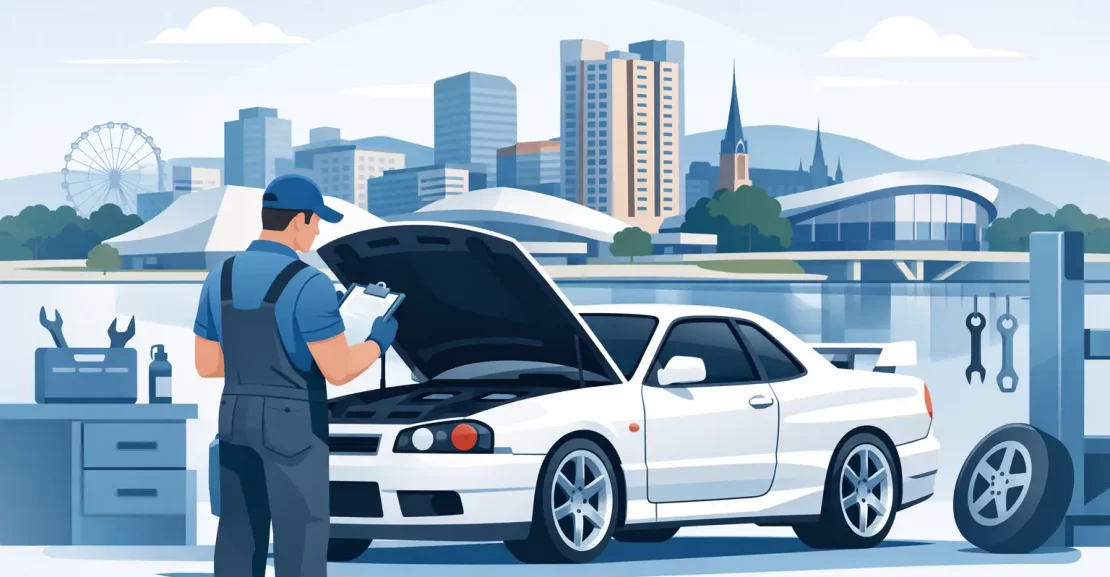
A Nissan Skyline is not a car to hand over blindly for a quick service and a generic inspection sheet. Whether it is an R32 GT-R, an R33 coupe, an R34 GT-T or a V35 daily driver, finding the right Skyline mechanic Adelaide owners can rely on comes down to more than a workshop being willing to work on Japanese cars. It takes experience with the platform, access to the right parts and a practical understanding of how these cars age.
For many owners, the goal is simple: keep the car reliable, safe and enjoyable without losing the character that made them buy a Skyline in the first place. That means sorting small issues before they become major repairs, avoiding poor-quality replacement parts and making decisions that suit how the car is actually used.
Why Skylines Need Specialist Mechanical Knowledge
Most Skylines are now older vehicles, even when they have been well looked after. A tidy import may present beautifully, but rubber components, cooling systems, electrical connections and factory sensors do not last forever. A car that starts easily and drives well on a short test drive can still have ageing hoses, tired suspension bushes, an intermittent ignition issue or evidence of previous modifications that needs closer attention.
The engine and drivetrain fitted to your car matters. RB20, RB25, RB26 and VQ-powered Skylines each have their own servicing priorities, common faults and parts considerations. Turbocharged models also need particular care around boost control, fuelling, cooling and oil condition. A workshop familiar with these systems can diagnose the cause rather than simply replace parts until the fault disappears.
There is also the matter of previous work. Many 1990s and 2000s Japanese classics have passed through several owners and may have been modified in different stages. Some upgrades are sensible and well fitted. Others can create reliability problems, make the car difficult to tune or complicate future repairs. A proper inspection should identify what has been changed, how it has been installed and whether it suits the intended use of the vehicle.
What a Skyline Mechanic in Adelaide Should Check
A specialist service should be built around the condition and history of the individual car, not just a standard kilometres-based checklist. If service records are incomplete, a mechanic may recommend establishing a known baseline. This can involve replacing critical fluids and filters, checking the timing belt history where applicable, inspecting the cooling system and assessing brakes, tyres, suspension and driveline condition.
Cooling, Oil and Preventative Maintenance
Cooling system condition deserves attention on any older Skyline, particularly a turbo model. Radiators, hoses, thermostats, fans and radiator caps all play a part, and a small leak or weak component can quickly become expensive if the engine overheats. An experienced workshop will look beyond the coolant level to check for pressure loss, corrosion, damaged hoses and signs that the system is not controlling temperature properly.
Oil servicing is equally important. The right oil grade depends on the engine, its condition, how it is driven and whether it has performance modifications. A largely standard weekend car may not need the same approach as a higher-powered turbo car used for spirited driving or track days. The sensible choice is not always the most expensive oil on the shelf. It is the one suited to the engine and supported by regular changes.
Preventative maintenance can feel less exciting than a new exhaust or intercooler, but it protects the investment. Belts, filters, fluids, spark plugs, coils and worn hoses are far easier to deal with in the workshop than on the side of the road.
Turbo, Fuel and Ignition Diagnostics
A rough idle, hesitation under load, poor fuel economy or a boost issue can have several causes. On an older turbo Skyline, the answer could be as straightforward as worn spark plugs or a split vacuum line. It could also involve ageing coil packs, fuel delivery, airflow metering, boost leaks, turbo condition or an aftermarket tune that no longer matches the hardware.
This is where methodical diagnosis matters. A good mechanic will inspect, test and narrow down the issue before recommending repairs. Throwing expensive parts at a fault can waste money and still leave the underlying problem unresolved.
Owners should be clear about the symptoms they have noticed. Mention whether the issue occurs when cold, at idle, under boost, after the car has been sitting, or only at a particular engine speed. That detail helps the workshop begin in the right place.
Suspension, Brakes and Driveline Wear
A Skyline can still feel quick with worn suspension bushes, tired dampers or a noisy wheel bearing, but it will not drive as it should. Old rubber can make the car vague through corners, affect tyre wear and reduce confidence under braking. On lowered or modified vehicles, alignment and suspension geometry need additional attention.
Driveline noises should not be ignored either. Manuals, differentials, tailshafts, CV joints and wheel bearings all deserve inspection when there is clunking, vibration or a whine that changes with speed. The repair required will depend on the fault, so an accurate diagnosis is far more useful than assuming the gearbox or differential is at fault.
Choosing Between Standard Repairs and Upgrades
Not every Skyline needs more power. For a road car, reliable cooling, good brakes, quality tyres and a properly sorted suspension often make a bigger difference to the driving experience than another boost increase. The right path depends on whether the car is a collector-grade example, a weekend cruiser, a daily driver or a dedicated performance build.
OEM-style parts are often the best option for restoration work and standard vehicles, particularly where fitment, refinement and long-term reliability matter. Quality aftermarket parts can make sense for performance applications, but brand selection and correct installation are critical. Cheap components can create fitment problems, premature failure and more workshop time later.
It is also worth considering future serviceability. A heavily modified setup may deliver strong numbers, but it can make the car less practical, more difficult to diagnose and harder to return to a road-friendly standard. A workshop should explain the trade-offs clearly, not push modifications that do not suit the car or the owner.
Questions Worth Asking Before Booking
Before choosing a workshop, ask whether it regularly services and repairs Skylines, including older imported examples. Find out how it approaches diagnostics, whether it can source OEM and reputable aftermarket parts, and whether it will discuss the condition of the car in plain terms before work begins.
You should also ask for priorities. A good specialist will separate urgent safety or reliability repairs from work that can be planned for later. That makes it easier to budget without overlooking something that could cause damage or leave the car off the road.
For imported vehicles, parts access matters. Some items are readily available locally, while others require specialist sourcing. An established JDM-focused business such as Sinergy Motorsports can help owners make practical decisions around maintenance, repairs, restoration and component supply, rather than treating every Japanese import as an unknown quantity.
Keep the Service History Working for You
Keep invoices, note the parts fitted and record dates and kilometres for major work. This makes future diagnosis easier and gives the next owner confidence if you decide to sell. For a classic Skyline, documented maintenance can be just as valuable as a clean interior or desirable factory options.
The best time to find a capable specialist is before a warning light, overheating issue or driveline noise becomes urgent. Book the car in, establish its condition and give it the maintenance it needs to keep performing at its best.