
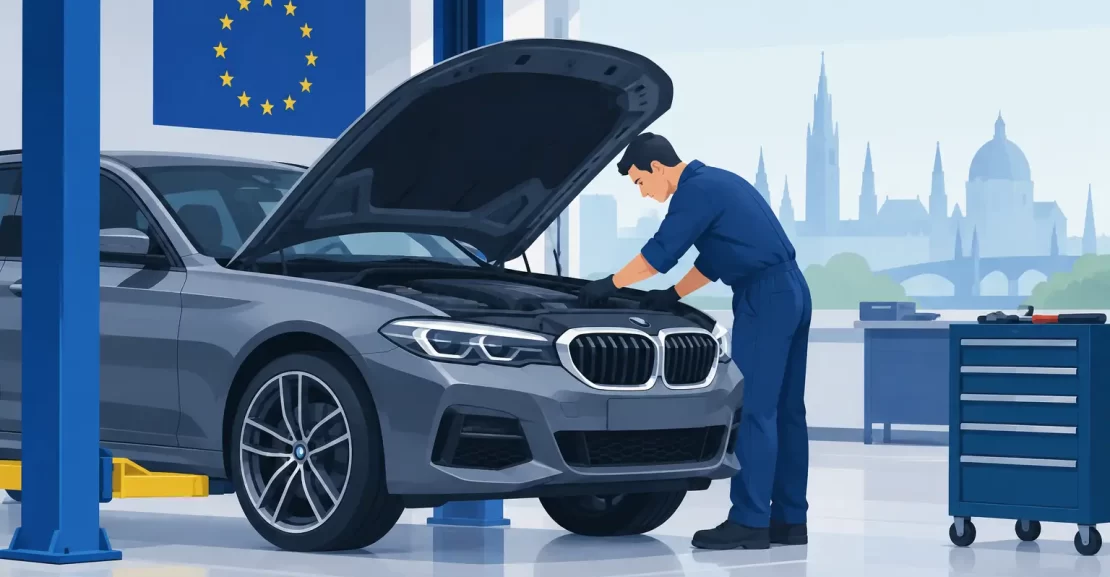
A warning light on a European car is rarely just a warning light. It may point to a sensor, wiring issue, software fault, vacuum leak, battery-voltage problem or a mechanical component beginning to fail. That is why European import repairs need more than a quick code scan and a replacement part guessed from a fault number.
For owners of BMWs, Mercedes-Benz vehicles, Audis, Volkswagens, Porsches and other prestige imports, the right repair process protects more than day-to-day reliability. It protects performance, safety and the long-term value of a car that was chosen because it offers something more than ordinary transport.
Why European Import Repairs Need a Specialist Approach
European vehicles are engineered around tightly integrated mechanical, electrical and software systems. A modern car can have dozens of control modules sharing information across the network. Even older European performance cars often use sophisticated engine management, variable valve timing, turbocharging, dual-clutch transmissions or electronically controlled suspension.
This does not make them inherently difficult to own. It does mean diagnosis matters. Replacing the part named by a generic scan tool can be expensive and ineffective when that part is only reporting the real issue elsewhere in the system.
For example, a misfire may be caused by an ignition coil, but it could also stem from a failing injector, an air leak, low fuel pressure, carbon build-up, a damaged harness or an oil-contaminated spark plug. A cooling-system warning may be a thermostat or water pump issue, but proper testing can also reveal a coolant leak, failed sensor, weak battery or cooling fan fault.
A workshop experienced with imported vehicles starts with the vehicle’s history, symptoms and diagnostic data, then confirms the fault before recommending repairs. It is a more methodical approach, and it can save owners from paying for parts that do not solve the problem.
The Common Areas That Deserve Attention
The exact service needs depend on make, model, engine and how the vehicle is used. A lightly driven weekend Porsche has different priorities to a diesel European SUV doing school runs and freeway kilometres. Still, several areas deserve close attention across many European imports.
Cooling systems and oil leaks
Plastic cooling components, expansion tanks, hoses, water pumps and thermostat housings can deteriorate with age and heat cycles. Small coolant leaks should not be ignored. On many European engines, overheating can quickly turn a straightforward repair into major engine work.
Oil leaks are also common on older prestige cars. Valve cover gaskets, oil filter housings, sump seals and turbo oil lines can all require attention. Some leaks are minor; others can affect belts, electrical components or exhaust parts. The right response depends on location, severity and whether the leak is actively worsening.
Timing components and service intervals
Timing belts, timing chains, guides and tensioners all have different maintenance requirements. A belt-driven engine may need replacement at a specified age or kilometre interval, even if the car has travelled relatively few kilometres. Chain-driven does not mean maintenance-free. Rattles on start-up, fault codes, rough running or poor service history can all warrant further inspection.
When buying a used European import, confirmed timing-belt history is worth far more than a verbal assurance. If there is no reliable record, budget for the work. Preventative maintenance is usually far cheaper than repairing an engine after component failure.
Transmission, drivetrain and suspension
Automatic and dual-clutch transmissions need correct fluids, filters and service procedures. Claims that a transmission has “lifetime” fluid should be treated carefully, especially on older vehicles or cars with incomplete servicing. Heat, stop-start traffic and enthusiastic driving all affect fluid condition.
Suspension is another area where prestige cars can lose their sharpness gradually. Worn bushes, control arms, engine mounts, dampers and wheel bearings may not make a vehicle undriveable, but they can affect braking stability, tyre wear, steering feel and refinement. Air suspension requires its own checks for leaks, compressor condition and height-sensor faults.
Electrical systems and batteries
Low voltage causes more issues than many owners expect. European cars can be sensitive to battery health, charging voltage and battery registration procedures after replacement. A weak battery can trigger multiple warnings that appear unrelated, from stability-control alerts to transmission faults.
Before replacing expensive modules, a thorough workshop should check battery condition, charging output, grounds and wiring. Water ingress around drains, door seals, boots or sunroof areas can also create electrical faults that need to be traced properly rather than masked.
Genuine, OEM or Aftermarket Parts: What Is Right for Your Car?
Parts choice is not a one-size-fits-all decision. Genuine parts are supplied through the vehicle manufacturer’s network. OEM parts are produced by the original manufacturer or an equivalent supplier, often without the vehicle brand packaging. Aftermarket parts vary widely in quality, fitment and warranty.
For safety-critical components, complex electronics, sensors and parts with known fitment issues, genuine or high-quality OEM components are often the sensible choice. On the other hand, a reputable aftermarket brake, suspension or cooling upgrade may be a good option for a performance-focused owner, particularly where it resolves a known weak point.
The cheapest option can cost more if it fails early, does not fit correctly or creates another fault. The most expensive option is not automatically necessary either. A good repair recommendation explains the choices, the expected outcome and where spending more genuinely adds value.
At Sinergy Motorsports, parts access and workshop experience help owners make practical decisions based on the car, the repair and how it will be used. That matters whether the priority is preserving an original classic, maintaining a daily driver or preparing a European sports car for more spirited weekend use.
Choosing a Workshop for European Import Repairs
The workshop you choose should be able to explain what it has found in plain language. You should know whether the diagnosis is confirmed, what testing has been carried out and whether there are related maintenance items worth addressing while the vehicle is apart.
Ask whether the repair uses quality parts, whether fluids meet the required specification and whether fault codes will be cleared only after the cause is rectified. For software-related faults, confirm that the workshop can perform the necessary coding, adaptations or service resets where required.
It is also worth asking for a clear estimate before work begins. European repairs can uncover additional issues once components are removed, particularly on older cars. That does not mean a workshop is being unreasonable. It means communication is important. A proper process involves contacting you with findings and options before extra work proceeds.
Dealer servicing may suit newer vehicles under factory warranty or those requiring a specific manufacturer campaign. An independent specialist can be a strong choice for owners seeking experienced diagnosis, flexible parts options and a workshop that understands older imports. The right option depends on the vehicle’s age, warranty status, condition and your plans for ownership.
Maintenance That Prevents Bigger Repairs
The best repair bill is often the one avoided through regular inspection. Follow the service schedule, but tailor it to the car’s age and use. A 15-year-old European performance car with low kilometres may still need hoses, seals, tyres, fluids and cooling-system components due to time rather than distance.
Pay attention to changes in the way the car starts, idles, brakes, shifts or steers. A new vibration, coolant smell, oil spot on the driveway, delayed gear change or intermittent warning light is worth checking early. Waiting until a vehicle is stranded can turn a manageable job into an urgent and costly one.
Keep service invoices and records, especially for major work such as timing components, transmission servicing, cooling-system repairs and suspension overhauls. Good documentation supports resale value and gives the next workshop a reliable starting point.
European ownership is most rewarding when maintenance is proactive rather than reactive. Give the car the right diagnosis, the right parts and the right attention, and it can continue to deliver the performance and character that made it worth importing in the first place.