
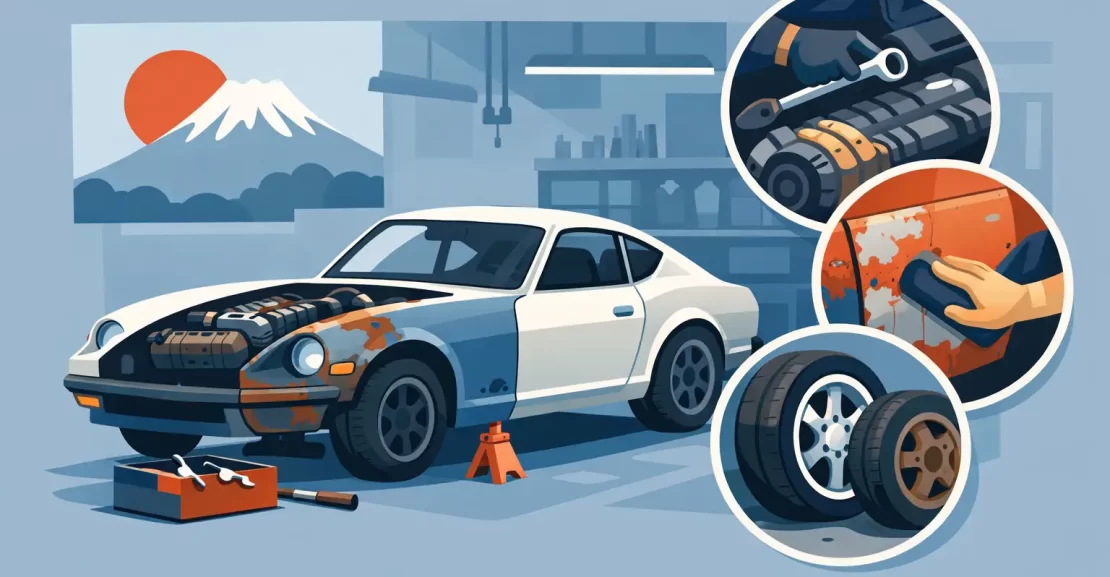
A tidy R32 Skyline, SW20 MR2 or early Honda can look like an easy project from the outside. Fresh paint, clean wheels and a polished engine cover can hide years of corrosion, poor repairs and neglected maintenance. Proper Japanese car restoration starts well before the panel shop. It starts with an honest assessment of what the car is, what it needs and what you want it to become.
For owners of 1990s and 2000s Japanese classics, the best restoration is rarely the one with the biggest first invoice. It is the one planned in the right order. Sorting the structure, mechanical condition and parts availability first protects the value of the vehicle and avoids paying twice for the same work.
Start With the Car You Actually Have
Before ordering parts or choosing a paint colour, identify the exact specification of the vehicle. Japanese imports can vary significantly by chassis code, production date, engine, trim level and previous modifications. A Nissan Skyline may have been built as a naturally aspirated model and converted later. A Toyota Supra could have non-original running gear. A Honda may carry parts from several model years.
Check the chassis number, compliance documentation, service history and any import paperwork. Then compare what is fitted to what should be there. This matters when sourcing brake components, suspension bushes, sensors, interior trim and body panels. It also tells you whether the vehicle is a clean preservation candidate or a modified build that should be restored with performance and reliability in mind.
Originality has value, but it is not the only goal. A factory-correct restoration suits some collector-grade cars. For a vehicle intended to be driven regularly, sensible upgrades such as better cooling, refreshed brakes, modern tyres and dependable engine management may make far more sense. The key is making those choices deliberately, rather than discovering them halfway through the job.
Japanese Car Restoration Begins Underneath
Paintwork is visible. Rust and accident damage are not always. Put the car on a hoist before committing to a restoration budget, particularly if it has spent time near the coast, in a humid part of Japan or has unknown history.
Inspect the chassis rails, floorpan, sills, jacking points, suspension mounting points, subframes and boot floor. On older Japanese cars, inspect around the windscreen, rear screen, wheel arches and battery tray as well. Water can sit behind trims and sound deadening for years, causing corrosion that is only found when the interior or guards come apart.
Previous repairs deserve the same attention. Look for uneven seams, overspray, inconsistent underseal, distorted rails and filler hiding around quarter panels. A repaired car is not automatically a bad car, but poor structural repairs can affect alignment, tyre wear, handling and safety. Restoration work only makes sense when the foundation is sound or can be repaired properly.
Rust repair is not an area to shortcut. Treating surface corrosion is one thing; cutting out affected metal and fabricating repair sections is another. The correct path depends on the extent and location of the damage. Cosmetic work over structural rust may look acceptable for a short time, but it will not deliver a reliable or valuable result.
Make It Drive, Stop and Cool Properly
A classic Japanese car should be mechanically dependable before it is made pretty. That means assessing the engine, gearbox, differential, driveline, brakes, steering, suspension and cooling system as a package.
Start with baseline checks. Compression or leak-down testing can reveal engine condition. Cooling-system pressure testing may expose leaks before they become overheating problems. Check for oil leaks, fuel hose condition, cracked vacuum lines, worn engine mounts and tired radiator hoses. On turbocharged cars, inspect intercooler piping, wastegate operation and signs of boost leaks or smoke.
Timing belts, water pumps and accessory belts should never be assumed to be current because the engine runs well. The same goes for old fluids. Brake fluid, coolant, gearbox oil, differential oil and fuel can all degrade while a car is parked. Many restoration projects arrive after years in storage, and recommissioning them properly is often more involved than a standard service.
Suspension and brakes are where old cars can feel transformed without changing their character. Replace worn bushes, ball joints, wheel bearings, dampers and brake hoses as required. Reconditioned calipers, fresh rotors and correctly matched pads can restore confidence on the road. Avoid fitting aggressive coilovers or oversized brakes simply because they are available. Spring rates, wheel fitment and brake bias need to suit the vehicle and how it will be used.
Plan Parts Before Pulling the Car Apart
Parts access can determine the scope and timeline of a restoration. Common service items may be straightforward to source, while a damaged tail-light, moulding, dashboard switch or model-specific interior trim could take considerable time to locate.
Before dismantling, create a parts plan for the major systems: mechanical, body, trim, electrical and consumables. Photograph the car thoroughly, label hardware and keep removed components organised. Small clips, brackets and fasteners are often overlooked until reassembly, when a missing item can stall progress.
OEM parts are generally the right choice where fit, safety and originality matter most. Genuine seals, clips, sensors and trim pieces can save frustration compared with cheap reproductions. Aftermarket parts can be a strong option for performance hardware, suspension, cooling and replacement components where OEM stock is no longer available. Quality varies, so brand reputation and correct application matter.
There is also a difference between unavailable and difficult to find. With established import specialists and parts networks, many items for Japanese classics can still be sourced locally, from Japan or through specialist suppliers. Allow for freight, lead times and the possibility that an older part may need refurbishment rather than replacement.
Preserve the Details That Make the Car Worth Owning
Japanese performance cars from the 1990s and 2000s have become more collectible because they deliver a distinct driving experience. Their appeal is not just peak power. It is the period-correct interior, analogue gauges, light steering feel, turbo response and the details that identify a specific grade or market.
That makes interior restoration more important than many owners expect. Repairing sagging headlining, worn seat bolsters, cracked plastics, faded switchgear and damaged door trims can lift the whole vehicle. Original fabric and trim patterns are often difficult to replace, so preserve usable components wherever possible. Careful cleaning and repair may be preferable to replacing a serviceable original part with an incorrect aftermarket item.
Electrical work should also be treated carefully. Old alarms, stereo wiring, boost controllers and poorly fitted accessories create faults that can be difficult to trace. A tidy, documented wiring repair is safer and easier to maintain. If the car has been modified, retain records of what was changed and why. The next owner, workshop or auto electrician will appreciate it.
Set a Budget With Contingency
A realistic budget is one of the most useful restoration tools. Build it around inspections and priorities, not an optimistic parts list. Include labour, consumables, freight, machining, paint preparation, registration requirements and a contingency for findings once the car is dismantled.
It is usually more cost-effective to complete one system properly than to spread money across several incomplete jobs. For example, finishing the cooling system and major engine service may be a better use of funds than buying wheels while the car still has old hoses and questionable brakes. A staged approach works well when it is planned: make it safe, make it reliable, then improve presentation and performance.
Keep invoices, photographs and notes throughout the work. These records support future servicing, help establish provenance and can make a meaningful difference when it is time to sell. They also show that the restoration was more than a cosmetic refresh.
Choose a Workshop That Knows the Platform
General mechanical knowledge is valuable, but older imports have their own quirks. Chassis-specific parts, Japanese-market wiring, ageing turbo systems and discontinued components call for experience with the platform. The right workshop will explain priorities clearly, identify where money is best spent and tell you when a proposed modification is not worthwhile.
For Adelaide owners, Sinergy Motorsports brings more than 20 years of experience with Japanese classics, from maintenance and diagnosis through to restoration and parts sourcing. That practical background matters when the goal is to keep a car roadworthy, reliable and true to what made it special in the first place.
A good restoration does not need to happen all at once. Start with a proper inspection, make the vehicle safe and mechanically sound, and let each completed stage move the car closer to being driven and enjoyed again.