
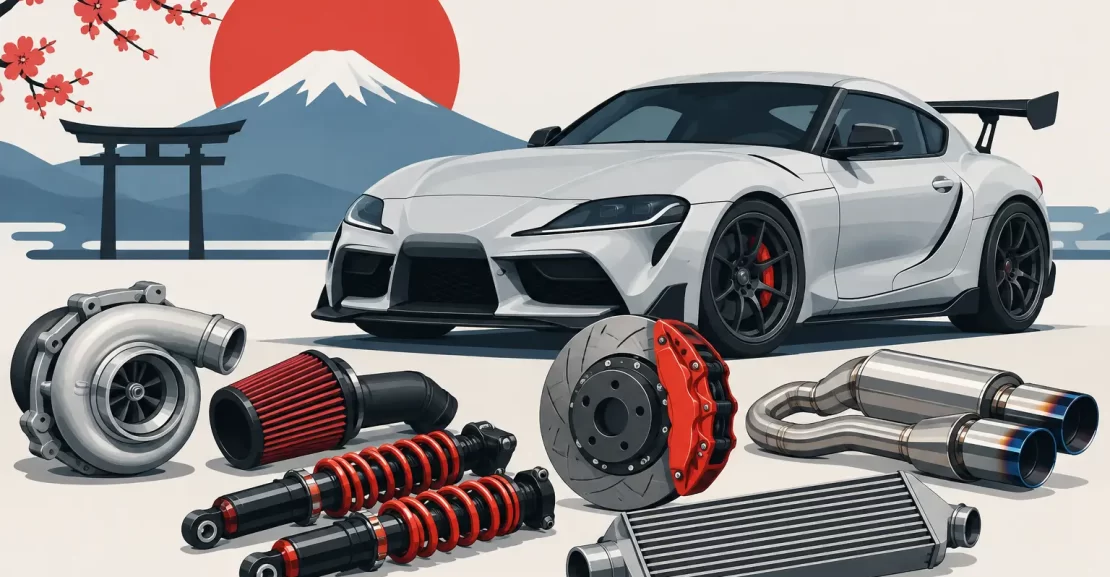
A turbo Skyline that hesitates under boost, an S2000 with tired engine mounts, or a Supra that no longer stops with confidence rarely needs random upgrades. It needs the right Japanese performance parts, fitted properly and chosen around the way the car is actually used.
For owners of JDM classics and imported performance cars, parts choice is not just about adding power. It is about protecting reliability, preserving drivability and making sure every component works with the rest of the vehicle. A well-planned build feels sharper and more dependable. A collection of mismatched parts can create expensive problems that were never there to begin with.
Start with the car’s real condition
Before ordering performance parts, establish a baseline. Many 1990s and 2000s Japanese vehicles are now old enough that worn rubber, ageing sensors, cooling-system issues and neglected servicing can disguise themselves as performance limitations.
A healthy engine, sound gearbox, fresh fluids and a properly functioning cooling system should come before a larger turbocharger, aggressive camshafts or a high-flow exhaust. The same applies to brakes and suspension. There is little point fitting more power if the car wanders under braking, overheats in traffic or cannot put power down cleanly.
This is particularly relevant with imported vehicles. A car may have spent years in a different climate, had modifications fitted overseas, or arrived with limited service history. A specialist inspection can identify previous repairs, non-standard wiring, tired bushes and parts that are difficult to source before they become a problem.
Japanese performance parts should serve a purpose
The best parts list starts with an honest answer to one question: what do you want the car to do better?
A street-driven Honda, Toyota or Nissan needs different choices from a dedicated track car. For a weekend cruiser, responsive throttle feel, stable brakes and compliant suspension may make a bigger difference than chasing a peak power figure. For circuit use, cooling capacity, brake consistency, tyre choice and alignment settings become far more important.
Think about the whole package. A freer-flowing exhaust may suit an otherwise standard engine, but the results will differ once intake changes, boost control and fuel-system upgrades enter the picture. On turbocharged cars, tuning is not an optional final step. It is the process that brings the combination together safely.
It also pays to consider where the car is driven. Adelaide summer temperatures, stop-start traffic and long country runs can expose weaknesses that do not show up during a short dyno session. A slightly less aggressive setup with better cooling and a conservative tune is often the smarter long-term choice.
OEM, aftermarket and used parts all have a place
Not every part needs to be an aftermarket upgrade, and not every genuine part is automatically the best answer. The right option depends on the component, the car’s condition and the intended use.
OEM parts are often the sensible choice for sensors, seals, clips, gaskets, ignition components and other items where correct fitment and predictable operation matter most. On rare Japanese classics, genuine replacement parts can also help retain originality and value.
Quality aftermarket components make sense where factory parts have known limitations or where the vehicle’s output and use have moved beyond standard specifications. Brake pads, coilovers, intercoolers, radiators, clutches and engine-management systems are common examples. The key word is quality. A reputable component backed by proven fitment is usually cheaper than replacing a poorly made copy after it fails or causes damage.
Used parts can be worthwhile for hard-to-find trim, factory wheels, body components and certain mechanical assemblies. However, their condition needs to be assessed realistically. A second-hand differential, gearbox or turbocharger may look like a bargain until labour, seals, machining and rebuild costs are added. Ask about provenance and check part numbers rather than relying on a listing that says it should fit.
Fitment matters more than the catalogue description
Japanese models can vary significantly between markets and production years. An engine code may be shared across several vehicles, yet accessories, wiring plugs, sump configurations, brake setups and ECU calibrations can differ. This is where assumptions become costly.
Check the chassis code, engine code and production date before purchasing. If the car is an import, confirm whether it has Japanese-market, Australian-delivered or mixed components. Previous owners may have fitted later-model brakes, an aftermarket ECU, engine swaps or conversion parts that change what will work.
Clearance is another common issue. Larger intercoolers can affect bumper fitment. Coilovers can alter wheel and tyre clearance. Exhaust systems may need attention around heat shields, driveshafts and compliance requirements. A part that bolts on is not necessarily a part that fits correctly once the car is lowered, loaded up or driven hard.
Build power in stages, not in surprises
For a turbocharged Japanese car, a reliable upgrade path generally begins with maintenance and monitoring. Address timing belts or chains, plugs, coils, vacuum lines, filters and cooling before increasing boost. Then make sure fuel delivery and engine management are capable of supporting the planned output.
Useful supporting upgrades often include a better radiator, fresh hoses, a suitable fuel pump, injectors where required, a boost gauge and accurate engine data. Depending on the platform, oil cooling and baffled sump solutions may also be worthwhile for spirited or track driving.
Naturally aspirated cars need the same discipline. Intake, headers and exhaust can improve response and character, but gains can be modest without matching tuning and realistic expectations. Suspension, braking and tyres frequently deliver a more noticeable improvement on the road than a noisy intake alone.
Do not skip the tune to save money. An ECU calibration should be carried out for the fuel available, the specific hardware fitted and the way the vehicle will be driven. A safe tune is not the one with the biggest number on a screen. It is the one that maintains sensible air-fuel ratios, ignition timing, temperatures and knock control under real load.
Put brakes, tyres and suspension first when needed
More power attracts attention, but chassis work makes a performance car enjoyable every time it is driven. Fresh tyres, correct wheel alignment, quality brake pads and properly matched suspension can transform an older JDM car without changing the engine at all.
Suspension selection should reflect road conditions and intended use. Very stiff coilovers may look right at a meet, but they can reduce grip on rough roads and make the car tiring to drive. Spring rates, damper adjustment, ride height and geometry need to work together. Lower is not automatically better.
Brake upgrades also need balance. Bigger calipers may require the right master cylinder, brake lines, pad compound and tyre to deliver the expected result. For many street cars, high-quality pads, fresh rotors, proper fluid and a brake-fluid flush are the most effective first move.
Choose support that understands older imports
Parts are only one part of the job. Diagnosis, installation and follow-up maintenance determine whether a build remains enjoyable six months later. This matters most with older Skylines, Supras, GT-Rs, Hondas, Mazdas and Toyotas, where factory parts availability, common faults and previous modifications can all affect the plan.
Sinergy Motorsports has more than 20 years of specialist experience with Japanese classics and imports, helping owners source OEM and aftermarket components that suit the vehicle rather than simply filling a cart. That experience is valuable when a part number is unclear, a car has been modified before, or a practical alternative is needed for a hard-to-source item.
Keep records of what has been fitted, when it was installed and what tune or settings the car is running. It makes future servicing easier, protects resale confidence and helps the next decision be based on facts rather than guesswork. The right Japanese performance parts should leave you with a car that is not only quicker or sharper, but one you are happy to drive whenever the road opens up.