
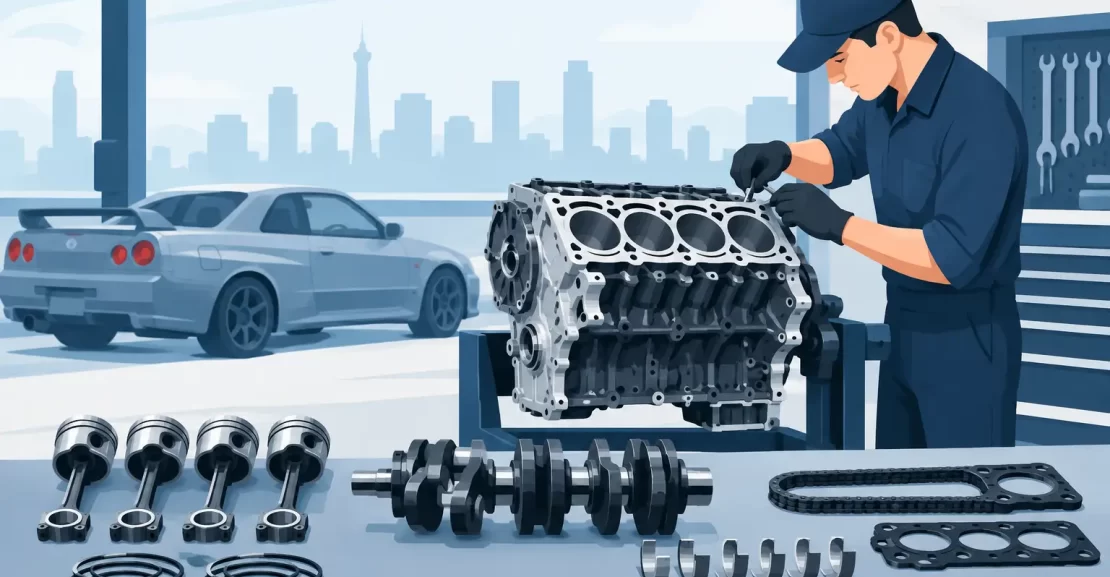
An RB Skyline can feel strong right up until it does not. A light bottom-end knock on cold start, falling oil pressure, rising blow-by or metal in the oil filter can turn a minor concern into an engine-out job quickly. This Skyline engine rebuild case study follows the practical decisions behind rebuilding a turbocharged RB25DET for dependable street use, rather than chasing a headline dyno number.
The goal was simple: retain the character that makes a Skyline enjoyable while building an engine that could handle regular driving, sensible boost and the occasional spirited run. That goal shaped every decision, from the first compression test through to the final run-in service.
The starting point: symptoms before assumptions
The car arrived with oil consumption, an uneven idle once warm and a noticeable rattle under load. None of those symptoms automatically means a complete rebuild. On an older imported vehicle, the causes can range from tired ignition components and turbo seal issues to worn valve stem seals, ring wear or bearing damage.
The right first step is diagnosis, not ordering parts. Compression and leak-down testing help show whether the cylinders and valves are sealing properly. Oil pressure testing confirms whether the gauge is telling the truth. Inspecting the drained oil, filter and sump can reveal bearing material or debris that changes the scope of the job immediately.
In this case, the leak-down results pointed to cylinder sealing issues, while the oil filter showed fine metallic material. The engine had to come out. Continuing to drive it may have turned a repairable crankshaft and block into a much more expensive replacement exercise.
Strip-down tells the real story
Once removed and dismantled, the RB25DET showed wear consistent with age, kilometres and prior modifications. The bores had glazing and taper, the piston rings had lost their ability to seal effectively, and the bearing shells showed damage from contaminated oil. The crankshaft journals needed proper measurement rather than a visual judgement.
This is where a rebuild either becomes reliable or becomes a collection of new parts fitted to old problems. Every critical component needs cleaning, measuring and inspection. The block, crank, rods, pistons, cylinder head, oil pump assembly and turbo feed system all deserve attention.
A Skyline engine is especially unforgiving of shortcuts in oil control. RB engines have a well-known reputation for suffering when oil supply, oil return, sump control or bearing clearances are not right. A fresh set of bearings alone cannot overcome a tired pump, blocked gallery, poor clearances or oil diluted by fuel.
Machining based on measurements
The block was sent for cleaning, crack checking, cylinder measurement and machining. Depending on bore condition, the correct answer may be a hone, an oversize bore with matching pistons, or sourcing another suitable block. There is no universal answer.
For this engine, the bores required machining and new pistons were selected to suit the final measurements. The crankshaft was measured and machined as required, with bearing sizes chosen from those figures. That order matters. Clearances are built around measured components, not guessed from catalogue listings.
The cylinder head was stripped, checked for flatness and inspected around the valve seats and guides. A tired head can undo the work completed below it. Valve stem seals, valve seating and camshaft condition all influence idle quality, oil use and long-term reliability.
Parts selection: build for the car you actually drive
The owner wanted a responsive road car with a conservative power target, not a high-boost drag build. That ruled out spending money on components designed for a level of output the car would never use. It also meant avoiding cheap, unknown-origin parts where failure would require pulling the engine apart again.
A sensible street rebuild uses quality bearings, rings, gaskets, seals and timing components, along with pistons suited to the machining work and intended use. The oil pump, water pump and timing belt system should be considered part of the rebuild, not optional extras. Reusing questionable parts to save money at this stage is false economy.
The turbocharger and injectors also need assessment. A rebuilt short motor can be damaged quickly by a failing turbo shedding debris, an injector leaning out one cylinder or a fuel pump unable to supply the required volume. The fuel system, cooling system and ECU calibration are part of engine reliability.
There is a trade-off here. A modest, well-matched setup generally offers better response, easier tuning and lower heat load than an oversized turbo and aggressive boost target. More power is possible, but it comes with greater demands on fuelling, cooling, drivetrain condition and maintenance.
Assembly is where precision pays off
After machining and cleaning, assembly began with meticulous checking. Bearing clearances, ring end gaps, piston-to-bore clearance, crankshaft end float and fastener torque all need to be confirmed. Clean assembly practices are not glamour work, but they prevent contaminants entering freshly prepared components.
Oil system preparation received particular attention. Galleries were cleaned, the sump was inspected, and the pickup and pump condition were checked before final fitment. The engine was primed before first start so oil pressure could be established without relying on a dry initial crank.
Ancillary items were handled at the same time. Old hoses, brittle vacuum lines, ageing engine mounts and questionable sensors can create faults that look like engine problems later. With the engine out, access is easier and the labour overlap makes replacement more sensible.
Tuning is not an afterthought
A fresh engine should not be run hard on an old tune simply because it drove acceptably beforehand. Changes to compression, injectors, turbocharger, airflow meter or exhaust hardware can all alter fuelling requirements. Even an unchanged combination benefits from checking air-fuel ratios, ignition timing, boost control and knock response.
For this Skyline, the calibration was kept conservative for pump fuel and street conditions. The aim was smooth torque delivery and safe operating temperatures, not a one-off dyno figure. That approach gives the owner a car that is enjoyable in traffic, predictable on a warm Adelaide day and less likely to punish the new engine.
Run-in and the first service
The rebuild is not finished when the engine starts. Heat cycles, oil pressure, coolant level and leaks are monitored closely during the initial running period. The owner was advised to vary engine speed and load, avoid extended idling and stay away from sustained high boost until the first inspection and oil change.
Run-in advice can vary by engine specification, oil choice and builder preference. What does not vary is the need to inspect the car early. The first oil and filter change gives an opportunity to look for contamination, confirm fluid levels and check that clamps, fittings and fasteners remain secure after heat cycling.
Regular servicing matters even more after the run-in period. Turbocharged Skylines respond well to quality oil changed at sensible intervals, a clean cooling system, healthy ignition components and prompt attention to any change in oil pressure, smoke or noise.
What this Skyline engine rebuild case study shows
The real value of a Skyline rebuild is not simply fitting new pistons and calling the job done. It is the sequence: diagnose accurately, measure everything, machine only where required, choose parts for the intended use, address supporting systems and tune the car safely.
A full rebuild is not always the correct answer. A compression issue may be isolated to the head, and a smoke complaint may come from the turbocharger or valve stem seals. But when the evidence points to internal wear, doing the job properly protects the car’s performance, value and future enjoyment.
For owners of older Japanese classics, the best next move is to act on early symptoms and seek a specialist assessment before the damage spreads. Sinergy Motorsports can help keep your Skyline performing at its best with experienced diagnosis, rebuild planning and the right parts for the job.